Hottel Speaker
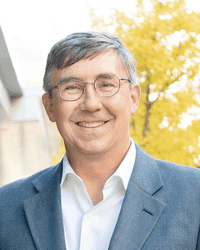
William H. Green
MIT, United States
Combustion Chemistry and Methods, Technologies for Sustainability
William H. Green is the Hoyt C. Hottel Professor at MIT and Director of the MIT Energy Initiative. He was formerly the Editor of the International Journal of Chemical Kinetics, and Executive Officer of the MIT Dept. of Chemical Engineering. Before joining the faculty at MIT in 1997, he was a principal investigator at Exxon’s Corporate Research Science Lab. He received his B.A. in Chemistry from Swarthmore College in 1983, and his Ph.D. in Physical Chemistry from the University of California Berkeley in 1988. Dr. Green’s research focuses primarily on the prediction of molecular properties, reaction rates, and overall system kinetics, and his group developed the open source Reaction Mechanism Generator (RMG) and Chemprop software packages. He also experimentally studies chemical processes related to combustion, and conducts technoeconomic assessments of new processes. He has co-authored more than 370 refereed journal papers, cited more than 29,000 times. He co-founded the start-up companies Thiozen and LNK Energies with his former students to commercialize new fuel processes invented in his lab. He is a Fellow of the Combustion Institute and a Fellow of the American Association for the Advancement of Science. He has received several awards including the ACS’s Glenn Award in Energy & Fuels chemistry and the AIChE’s Wilhelm Award in Reaction Engineering.
Plenary Speakers
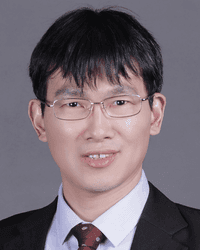
Zheng Chen
Peking University, China
Flame Processes
Bénédicte Cuenot
Safran Aircraft Engines, France
Computational Methods and Combustion
Dr. Zheng Chen is the Bo-Ya Professor and Associate Dean of College of Engineering at Peking University. He received his B.E. in Engineering Thermophysics from Tsinghua University in 2001, and his Ph.D. in Mechanical and Aerospace Engineering from Princeton University in 2009. Dr. Chen’s research focuses on the flame dynamics of fundamental combustion processes. He has worked on ignition theory, accurate laminar flame speed measurement, deflagration-to-detonation transition, and detonation engines. He has published more than 170 refereed journal articles. Dr. Chen is a Fellow of the Combustion Institute. He has received the Hiroshi Tsuju Early Career Researcher Award from the Combustion Institute and the Young Investigator Prize from Asian-Pacific Conference on Combustion. Currently, Dr. Chen is an Associate Editor of Combustion and Flame.
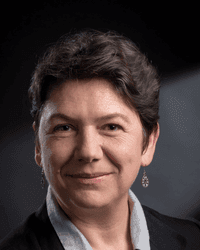
Dr- HdR B. Cuenot obtained her engineering diploma and Master's degree from Ecole Centrale de Paris in 1990. After a year as a research engineer at the University of Boulder (CO, USA), she defended her PhD in 1995 and her HdR in 2000, both in the field of numerical combustion. For more than thirty years, she worked on numerical simulation (DNS and LES) of turbulent multiphase reactive flows, heat transfer (including thermal radiation) and plasma flows in industrial systems. Dr. Cuenot has taught combustion and fluid mechanics at various universities and is the author of around 150 articles published in peer-reviewed journals. She led the combustion research group at CERFACS from the 2000s until recently and has been Full Professor at the Technical University of Eindhoven from 2021 to 2024. She was appointed Fellow of the Combustion Institute in 2018 and has been a member of the Combustion and Flame editorial board. She was co-chair of the 39th International Combustion Symposium, held in Vancouver in July 2022. In April 2024, Dr. Cuenot joined Safran Aircraft Engines as a combustion expert.
Jiro Kasahara
Nagoya University, Japan
Detonative Propulsion
Arnaud Trouvé
University of Maryland, College Park, United States
Modeling of Wildland-Urban-Interface and urban fires
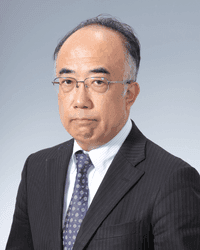
Jiro Kasahara is a professor in the Institute of Materials and Systems for Sustainability at Nagoya University, Japan. He received his B.S. in Aeronautical Engineering from Nagoya University in 1992. He received his Ph.D. in Aerospace Engineering from Nagoya University in 1997. Dr. Kasahara’s research interests include detonation combustion, high speed combustion, detonation engines, and aerospace propulsion application of detonation combustion phenomena. He published more than 100 refereed journal articles. He is a Fellow of the Japan Society of Aeronautical and Space Science and an Associate Fellow of the American Institute of Aeronautics and Astronautics (AIAA). Kasahara received number of awards including the Rem I. Soloukhin Award from the Institute of Dynamics of Explosion and Reactive Systems, the Best Paper Award from the Combustion Society of Japan, the Glass Memorial Lecture Award from the Shock Wave Research Society of Japan, and Pressure Gain Combustion Best Paper Award from the AIAA.
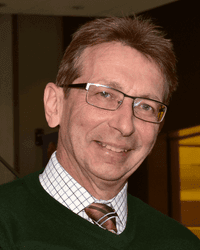
Arnaud Trouvé is Professor and Chair in the Department of Fire Protection Engineering at the University of Maryland in College Park, USA. He joined the Faculty in 2001 with a Ph.D. (1989) and Engineering Degree (1985) from École Centrale of Paris, France, and with previous experience as a combustion research engineer. Professor Trouvé’s research interests include fire modeling and Computational Fluid Dynamics, and physical modeling of combustion- and fire-related phenomena, including compartment fires, wildland fires, and urban fires. Professor Trouvé is a Fellow of the Combustion Institute and the recipient of the 2017 FORUM Sjölin Award. He has served on the editorial boards of the Proceedings of the Combustion Institute, Progress in Energy and Combustion Science, Combustion and Flame, and Fire Technology, and is currently on the editorial boards of Combustion Theory and Modelling and the Fire Safety Journal. Professor Trouvé is also a past Chair of the US Eastern States Section of the Combustion Institute (ESSCI) and a current Trustee of the International Association for Fire Safety Science (IAFSS). He is a co-Chair of a recent initiative endorsed by IAFSS and called the “IAFSS Working Group on Measurement and Computation of Fire Phenomena” (the MaCFP Working Group) and the past Chair of a new network of leading higher-education institutions and research laboratories in fire safety engineering called the International Fire Safety Consortium (IFSC).
Topical Review Speakers
Zhi X. Chen
Peking University, China
The Use of Data in Combustion Science
Sili Deng
Massachusetts Institute of Technology, United States
The Use of Data in Combustion Science
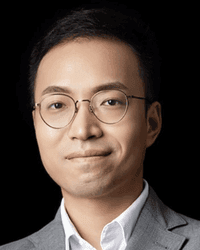
Dr. Zhi X. Chen is an Assistant Professor in the School of Mechanics and Engineering Science at Peking University, and the Deputy Director of AI for Science Institute, Beijing. He received his B.S. from Huazhong University of Science and Technology in 2012 and Ph.D. from University of Cambridge in 2017. His research interests include turbulent combustion, computational fluid dynamics, machine learning, high-performance computing, and their interdisciplinary areas. He has published over 60 peer-reviewed research articles. Before joining Peking University, Zhi was a Fellow of Robinson College at University of Cambridge. He received a number of awards including the Exceptional Talent of the Royal Academy of Engineering in 2019, the Bernard Lewis Fellowship from the Combustion Institute in 2020, and the Best Supercomputing Application Award of China Computer Federation in 2025.
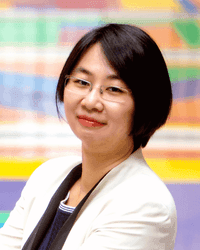
Prof. Sili Deng is the Doherty Chair in Ocean Utilization Associate Professor in Mechanical Engineering at Massachusetts Institute of Technology. She received her B.S in Thermal Engineering from Tsinghua University in 2010 and Ph.D. in Mechanical and Aerospace Engineering from Princeton University in 2016. After being a postdoctoral scholar at Stanford University, she joined MIT as an assistant professor in 2019. Her research focuses on energy conversion and storage, specifically, scientific machine learning for reacting flows, carbon- neutral energetic materials, and flame synthesis of materials for catalysis and energy storage. Prof. Deng has been well recognized by the research community, including receiving the Bernard Lewis Fellowship from the Combustion Institute, CAREER Award for the US National Science Foundation, Irvin Glassman Young Investigator Award by Eastern States Section of Combustion Institute, the US Early Career Combustion Investigator Award, and the Hiroshi Tsuji Award from the Combustion Institute.

Christian Hasse
Technical University of Darmstadt, Germany
Emerging Energy Carriers with focus on Metal Combustion
Xinyan Huang
The Hong Kong Polytechnic University, Hong Kong
Toward Mitigating Wildfires and Fires in Wildland-Urban Interfaces
Christian Hasse is Full Professor at the Technical University of Darmstadt, where he has been with the Department of Mechanical Engineering since 2017. He leads the Institute for Simulation of Reactive Thermo-Fluid Systems, a research group of more than 30 PhD candidates and postdoctoral researchers. He received his PhD in Mechanical Engineering from RWTH Aachen University in 2004. Before joining academia, he worked in engine research and development at BMW Group in Munich until 2010, when he was appointed Professor of Numerical Thermo-Fluid Dynamics at the Technical University Bergakademie Freiberg. His research aims to deepen the fundamental understanding of reactive thermo- fluid phenomena through high-fidelity modeling and simulation, with a focus on the combustion of emerging renewable energy carriers such as hydrogen, ammonia, e-fuels, sustainable aviation fuels, and metals. He considers engineering-based fundamental research a vital bridge between scientific curiosity and real-world impact. He has authored more than 300 peer-reviewed publications and delivered over 25 invited plenary and keynote lectures. He is deeply committed to mentoring early-career researchers, several of whom have received prestigious international awards and professorial appointments. He is a Fellow of The Combustion Institute and the Royal Aeronautical Society, serves on the Boards of Directors of both the International and the German Section of The Combustion Institute, and received an ERC Advanced Grant in 2024 for his project A-STEAM – Aluminum Steam Combustion for Clean Energy.
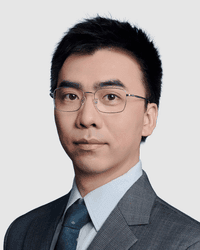
Dr. Xinyan Huang is an Associate Professor in the Dept of Building Environment and Energy Engineering at The Hong Kong Polytechnic University. He received his BEng from Southeast University, China in 2010, MSc from University of California, San Diego in 2012, and PhD from Imperial College London in 2016. Dr. Huang's research interests include smoldering wildfire, microgravity combustion, battery safety and AI-power fire research. He has co-authored more than 200 journal papers. Dr. Huang is an Associate Editor of Proceedings of the Combustion Institute (from 2026) and receives the Bernard Lewis Fellowship and Sugden Best Paper Award (British Section). He also receives the Early Career Award from International Association of Fire Safety Science and International Association of Wildland Fire, Ricardo Award for Best Combustion Paper from Institute of Physics, and NSFC Excellent Young Scientists Fund.
Alessandro Parente
Université libre de Bruxelles, Belgium
The Use of Data in Combustion Science
Alexei Poludnenko
University of Connecticut, United States
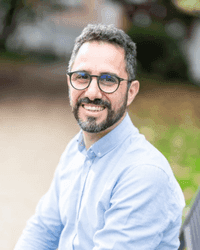
Professor Alessandro Parente is a Full Professor in the Aero-Thermo-Mechanics department at École Polytechnique de Bruxelles, Université Libre de Bruxelles. He has been the Co-chair of the Brussels Institute for Thermal-Fluid Systems and Clean Energy (BRITE) since 2021. He earned his Master's (2005) and PhD (2009) in Chemical Engineering from the Università di Pisa. He was a Research Associate at the University of Utah (2007–2009) and joined the von Karman Institute for Fluid Dynamics between 2009 and 2010. Professor Parente is a fellow of the Combustion Institute and currently serves as the Chair of its Belgium Section. His research spans experimental and numerical studies of reacting and non-reacting flows, with applications in air quality and industrial decarbonization. He has received two ERC grants and currently leads efforts in using machine learning to enhance fluid flow simulations and develop digital twins, coordinating a European-wide network (cypher.ulb.be) for decarbonizing hard-to-abate sectors.