Pre ISOC Workshops
The pre-Symposium workshops for the 41st ISOC will once again be available through a single registration, accessible via The Combustion Institute website on 1 May 2026.
Registration provides access to one workshop of your choice, with participants asked to indicate their preference during the registration process. Joint coffee breaks, lunches, and poster sessions will offer valuable opportunities for discussion, networking, and the exchange of ideas.
All workshops will take place at Doshisha University’s Shinmachi Campus, located approximately 15 minutes by subway from both Kyoto Station and the Kyoto Convention Center.
The workshops will be hosted by the following groups, each offering an independent program focused on a specific research topic or specialized area.
Early Bird Registration
Regular Registration
Ends June 21st
Ends July 12
Early Career
150
Early Career
200
Senior
200
Senior
250
Registration for the pre-Symposium workshops for the 41st ISOC is now open via the Combustion Institute website until 12 July 2026. Click the registration link below.
If you require a visa letter to attend the pre-ISOC workshops and symposium, please complete the Pre-ISOC Workshop Visa Invitation Letter Form. Click the visa form button below to be redirected to the CI Website.
International Workshop on Measurement and Computation of Turbulent Flames (TNF)
The TNF Workshop is an open and ongoing international collaboration among experimental and computational researchers in turbulent combustion. The main focus is on fundamental issues of turbulence-chemistry interactions in gaseous flames. The TNF17 workshop in Kyoto will emphasize collaborative comparisons of experimental data and simulations of selected target flames. Cases will include turbulent non-premixed, premixed, and multi-mode flames of hydrogen or NH3/H2. Potential experimental and DNS target cases are described on the TNF17 – Planning page of our website. Sessions on flame-wall interaction and AI/ML for combustion are also planned, and some sessions on premixed flames will be held jointly with the PTF workshop.
Website: https://tnfworkshop.org/

The International Workshop on the Measurement and Computation of Reacting flows with Carbon Nanoparticles (ISF)
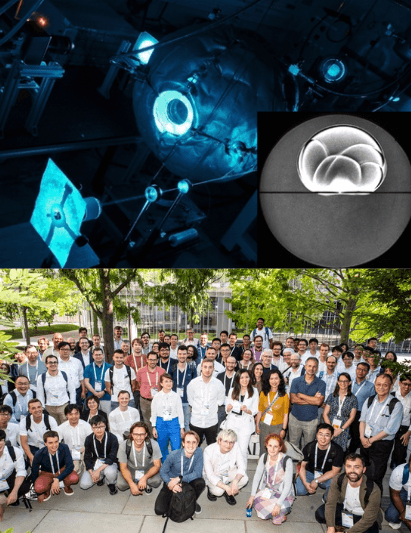
The ISF Workshop brings together leading international experimentalists and numerical modelers to advance quantitative understanding of the evolution of carbonaceous nanoparticles in well-characterized environments relevant to key practical systems, spanning soot-containing flames and fires through to high-temperature reactors for co-production of hydrogen and carbon materials. The ISF invites contributions from researchers through program leaders within three programs in these fields via our web-site, and through technical posters. The ISF-8 Workshop will also present industrial speakers, a panel session on new opportunities for research from advances in AI, and offer poster prizes for PhD students and early career researchers.
Website: ISF Workshop
Access past workshop materials and data sets (archived University of Adelaide website): ISF Workshop | University of Adelaide
8th International Flame Chemistry (FCWS) Workshop
The workshop aims to advance understanding of combustion chemistry through close interaction between experiments, theory, and chemical kinetics modeling, particularly in the context of the global energy transition. FCWS provides a focused forum to identify key scientific challenges, foster interdisciplinary collaboration, and promote coordinated strategies toward predictive combustion chemistry model.
The workshop addresses fundamental and applied aspects of flame chemistry underlying flame propagation, ignition, pollutant formation, and combustion system performance. Recent advances in sustainable fuels, diagnostics, plasma-assisted combustion, and automated theoretical methods have opened new opportunities while highlighting persistent gaps in data quality, validation, uncertainty quantification, and knowledge transfer. Building on outcomes from previous editions, discussions will be guided by a recent perspective paper summarizing challenges identified at the 7th FCWS (Milan, 2024).
The 8th FCWS will focus on five interconnected areas: sustainable fuels combustion; advanced diagnostics; plasma-assisted combustion; AI, automation, and benchmarking in theoretical kinetics; and chemical kinetics mechanism development. The program will include invited talks, a poster session, and a joint half-morning session with the Rapid Compression Machine Workshop. A central objective is to promote structured, community-driven working groups to enable sustained progress across workshop editions
Website: https://ifcworkshop.org/
The Premixed Turbulent Flame (PTF) Workshop
This a biennial gathering of international researchers whose aim is to advance understanding of turbulent premixed combustion physics. A critical motivational factor for pursuing such understanding is the current climate emergency. Namely, research efforts enabling power production and propulsion systems to operate with a premixed mode of combustion, particularly with carbon-free fuels, have great potential for reducing negative impacts to our environment. Thus, such studies are central to the PTF Workshop’s mission. Additionally, studies focusing on understanding fires and explosions, particularly for increasing safety, are strongly encouraged to participate in the workshop.
Research to understand fundamental physics of turbulent premixed flames may involve either experimental or computational efforts; however, studies that combine both approaches to address key knowledge gaps are encouraged. Furthermore, work that focuses on advancing the state-of-the-art of tools used to facilitate such studies are of critical interest. our objectives can be found on our website.
Website: Premixed Turbulent Flames Workshops
Rapid Compression Machine (RCM) Workshop
The 6th International RCM Workshop will meet to review progress on the 3rd Characterization Initiative (Resolving Complications of Multi-Stage Ignition), discuss challenges relevant to designing combustors and conducting experiments utilizing ‘sensitive’ fuels & conditions, and explore additional collaborative opportunities across the wider community. A joint session with the FCWS will discuss common challenges and best practices for community-driven efforts. The RCM Workshop seeks to advance the development of combustion technologies and future fuels, as well as combustion models that have sufficient predictive capability for use in the design of future combustors, including piston- and turbine-based configurations. Rapid Compression Machines (RCMs) can be applied towards quantitative understanding of fuel reactivity, chemical kinetic mechanism development and validation, and fluid dynamics – chemistry interactions. Activities undertaken within the Workshop characterize the behavior, capabilities and uncertainties of existing experimental apparatuses, and conduct analogous simulations of the experiments. Comparison with other experimental platforms (e.g., shock tubes, jet-stirred reactors) is also undertaken.